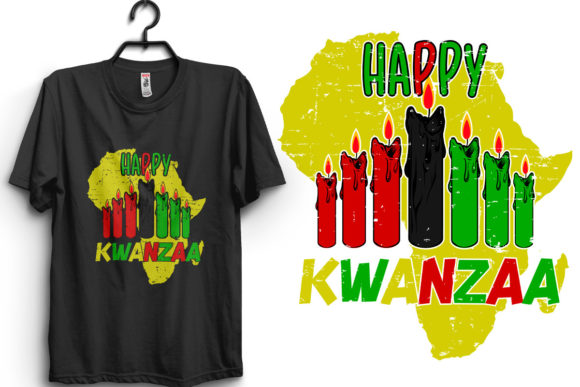
Designing Meaningful Kwanzaa Apparel: A Creator's Guide
There’s a unique power in wearing your values. During Kwanzaa, the vibrant celebration of African heritage and culture, clothing becomes more than fabric—it transforms into a walking statement of unity, creativity, and pride. For designers and entrepreneurs, creating a Kwanzaa T Shirt Design isn’t just about placing symbols on a template; it’s about capturing the spirit of Nguzo Saba (the Seven Principles) in a way that resonates deeply with your audience. A well-crafted design can turn a simple garment into a cherished keepsake, a conversation starter, and a wearable piece of art that honors tradition while feeling fresh and contemporary.
Beyond the Template: Crafting a Design with Cultural Resonance
The most effective Kwanzaa T-shirt design starts with understanding the visual language of the celebration. The colors—black, red, and green—are non-negotiable, each holding profound meaning. The kinara, the mishumaa saba (seven candles), and the mkeka (mat) are central icons. But simply slapping these elements onto a standard print template feels hollow. The real magic happens when you integrate these symbols thoughtfully. Think about composition: Does the design flow? Is the hierarchy clear? A great template, available in vector AI, EPS, SVG, and high-resolution PNG formats, gives you the foundational structure. It ensures your design is 100% vector, infinitely scalable from a tiny sticker to a large poster without losing quality, and print-ready at 300 DPI for crisp, professional results on any apparel or product.
From Concept to Commercial Product: Practical Applications
A versatile Kwanzaa design asset is a workhorse for your creative business or personal projects. Its utility extends far beyond a single T-shirt. Consider these practical applications where a high-quality, easy-to-edit template saves you time and elevates your output:
- Branding & Marketing: Use the design elements to create cohesive social media graphics, Facebook cover photos, or Instagram story templates that announce Kwanzaa sales or community events.
- Merchandise & Apparel: The primary use, of course. But think beyond standard tees. This design can be sublimated onto pillows, printed on tote bags, applied to mugs, or used as a sticker set. The POD (print-on-demand) ready file format means you can easily upload to services like Printful or Redbubble.
- Digital Products: Package the design as part of a "Kwanzaa Celebration Kit" for other creators, including printable wall art, invitation templates, or digital planner stickers.
- Community & Events: Local organizations, schools, or community centers can use the design for event posters, program covers, or volunteer T-shirts, fostering a strong visual identity for their celebration.
Ensuring Your Design Speaks Clearly: Readability and Impact
A beautiful design loses its power if its message is unclear. This is where typography and layout become critical. If your template includes text—perhaps a principle like "Ujima" (Collective Work and Responsibility) or a celebratory phrase—you must prioritize readability. A bold, clean sans-serif font often works best for impactful statements on apparel, ensuring the word is legible from a distance. Pair it with a simpler font for any secondary information. Test your design by viewing it at a small size; if the text blurs or the icons become muddy, simplify. Remember, on a T-shirt, you have mere seconds to communicate your message. The goal is immediate recognition and emotional connection, not a puzzle to be deciphered.
Building a Cohesive Collection: Strategy for Entrepreneurs
For the small business owner or creative entrepreneur, a single strong Kwanzaa design can seed an entire product line. Start with the core T-shirt. Then, deconstruct the design. Use the isolated kinara graphic for a minimalist phone case. Take the bold typography and create a standalone poster. Use the color palette and pattern from the background to design a coordinating notebook cover. This approach creates a visually consistent collection that looks professional and intentional across your shop. It strengthens your brand identity, making your store a go-to destination for culturally conscious consumers. The key is to use the template not as a finished product, but as a master asset library from which you can derive multiple, related products.
Making It Yours: The Importance of Customization
The file description emphasizes that the design is "easy to change," and this is perhaps its most valuable feature. A template is a starting point, not an endpoint. Your unique perspective is what will set your product apart. Use the vector files in Adobe Illustrator or a free alternative like Inkscape to make it your own. Swap out a font to match your brand's voice. Adjust the color balance slightly—maybe a deeper forest green or a richer burgundy—to create a unique mood. Rearrange the elements to fit different product dimensions, like a vertical layout for a poster versus a horizontal one for a tote bag. This customization transforms a generic template into a signature piece that reflects your specific brand's aesthetic and speaks directly to your niche audience. It’s the difference between selling a commodity and offering a curated experience.