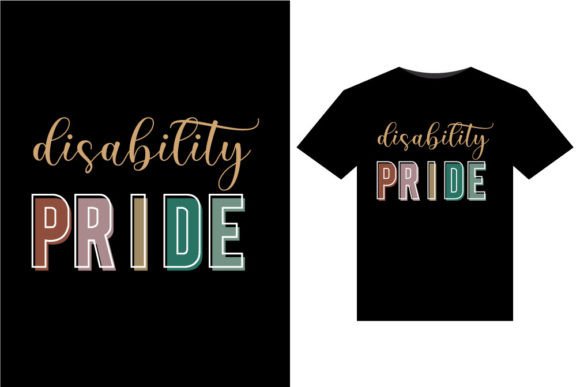
Wear Your Pride: Designing Impactful Disability Pride Apparel
There's a unique power in wearing your identity, your values, and your community on your sleeve—literally. Disability Pride is more than a month; it's a continuous movement celebrating the diversity, strength, and beauty within the disability community. For designers, entrepreneurs, and activists, creating merchandise like Disability Pride T-Shirts offers a tangible way to support this movement, foster visibility, and start conversations. But translating that powerful message into a compelling, print-ready design requires more than just good intentions. It demands thoughtful illustration, versatile file preparation, and an understanding of how design serves both expression and commerce.
Beyond the Symbol: Crafting Meaningful Visuals
A successful Disability Pride illustration for a T-shirt goes beyond simply placing a generic symbol on fabric. It tells a story. It might incorporate the vibrant colors of the disability pride flag, weave in imagery that represents different experiences (like mobility aids, sensory tools, or neurological diversity), or use bold typography paired with empowering slogans. The visual appeal lies in authenticity and creativity—designs that feel celebratory, respectful, and visually striking from a distance. Think about contrast for readability, line weight for detail clarity when screen-printed, and how the composition interacts with the human form. A design that looks great on a flat screen must also translate perfectly to the curved surface of a shirt.
The Anatomy of a Print-Ready Design File
You've created a stunning Disability Pride illustration. Now what? The bridge between a digital concept and a physical product is the file package. A professional, print-ready T-shirt design isn't a single JPEG. It's a comprehensive toolkit that ensures your design can be reproduced accurately across various printing methods—direct-to-garment (DTG), screen printing, vinyl heat transfer, or sublimation. This is where understanding your deliverables becomes critical. A robust package typically includes vector files for infinite scalability, high-resolution rasters for detailed prints, and layered source files for easy customization.
When you invest in a premium Disability Pride T-Shirts Design asset, you're paying for this versatility. Look for packages that include:
- Vector Formats (AI, EPS, SVG): These are your workhorses. They allow you to resize the design to fit anything from a small chest logo to an all-over print without losing a single pixel of quality. They are also fully editable in professional software like Adobe Illustrator.
- High-Resolution Rasters (PNG, JPG): A transparent PNG (often at 300 DPI and large dimensions like 4500x5400 pixels) is essential for DTG printing and mockups. A JPG provides a flat, print-ready version.
- Source Files (AI, EPS): Having the original, layered source file is a game-changer. It allows you to modify colors, tweak elements, or incorporate the design into a larger layout seamlessly.
- Additional Formats (PDF, DXF): PDFs are great for sharing proofs, while DXF files can be useful for specialty cutting machines if your design includes vinyl elements.
From Screen to Store: Practical Applications
The true value of a well-prepared Disability Pride design asset lies in its application. For a small business owner running a print-on-demand store, having a file set that includes a transparent PNG and scalable vectors means you can upload the same design to multiple platforms (like Printful, Redbubble, or Teespring) without a hitch. For a nonprofit organization, the editable source file allows you to adapt the primary T-shirt design into a cohesive brand identity—pulling elements for social media banners, event posters, and thank-you cards.
Consider these real-world uses:
- Branding & Merchandise: Use the core illustration as the centerpiece for a limited-edition apparel line. The color-changeable vector files let you offer the design in different colorways to match various shirt blanks.
- Marketing & Social Media: Extract a single element from the design—a hand holding a protest sign, a stylized wheelchair icon—to create engaging Instagram stories, Facebook ads, or TikTok overlays. The high-res PNG ensures clarity on any screen.
- Event Promotion: Planning a Disability Pride parade or workshop? Use the design on promotional materials. The PDF file can be sent directly to a local printer for posters, while the vector file ensures your event t-shirts look crisp.
- Digital Products: Incorporate the illustration into digital wallpapers, phone cases, or sticker sheets for an online community. The versatility of the files makes expanding your product line straightforward.
Design with Intention: Choosing the Right Style
Not all Disability Pride designs will resonate equally with every audience. The style you choose—whether it's a bold, graphic sans-serif font paired with a striking illustration, or a softer, handwritten script accompanying a more abstract symbol—sets the tone. Are you targeting a younger, activist-oriented crowd? A modern, high-contrast design might work best. Is your audience looking for something more subtle and elegant for everyday wear? A minimalist line drawing with a classic serif font could be the answer.
When selecting or creating a design, think about:
- Readability: Slogans must be legible at a glance. Test your design by viewing it at a small size on screen. If the words blur, simplify the font or increase spacing.
- Cultural Sensitivity: Research and, if possible, consult with members of the disability community. Symbols and language can carry deep meaning; ensure your design honors that.
- Commercial Viability: While the message is paramount, the design must also be technically feasible for production. Overly intricate details may not translate well to screen printing, and very large, solid color blocks can affect fabric feel.
Finalizing Your Asset: A Checklist for Creators
Before you list that T-shirt for sale or send your design to a printer, run through this final checklist. Does your file package truly support your goals? Verify that your vector files open correctly and are fully editable. Check the resolution of your PNG—is it truly 300 DPI at the required print size? Ensure you have the appropriate commercial license for the design asset, especially if you plan to sell physical products. A quality design file is an investment in your project's professionalism and scalability. It removes technical barriers, letting you focus on what matters: sharing a powerful message of pride, visibility, and solidarity with the world.